
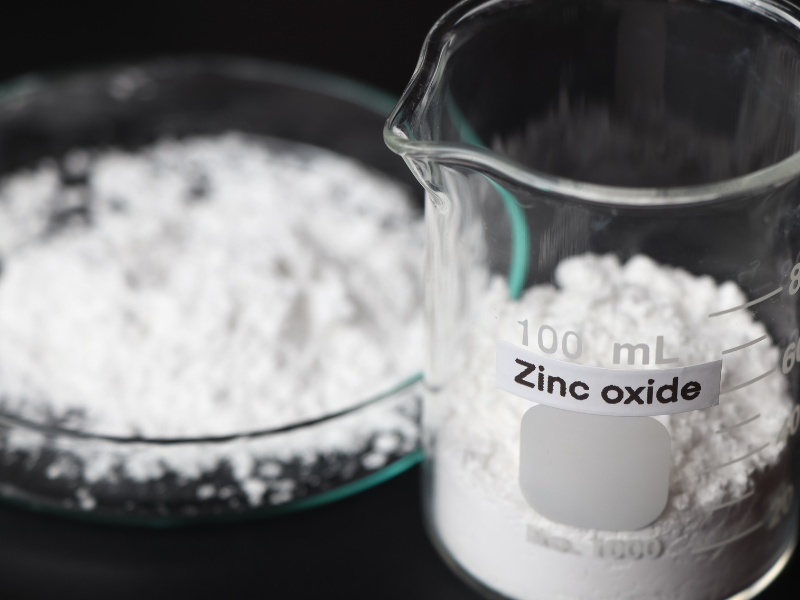
Zinc oxide for rubber is a crucial component in the modern rubber industry. This material is popular as the main activator in the vulcanization or curing process. Its role is crucial in producing strong, elastic, and durable rubber.
Zinc Oxide for Rubber as a Vulcanization Activator
Zinc oxide functions as an activator in vulcanization, working with stearic acid. This combination forms an activator system that accelerates the sulfur reaction in cross-linking formation. This process makes production time more efficient and results more consistent.
In practice, high-purity zinc oxide, around 99.5% to 99.8% ZnO, is often used. This level of purity also ensures optimal chemical reactions. The result is a rubber with a more stable and stronger structure.
Zinc oxide for rubber also increases the efficiency of cross-linking density formation. Tighter cross-linking also makes the rubber more resistant to deformation. This is especially important for products used under harsh conditions.
Improved Physical and Mechanical Properties
Besides acting as an activator, zinc oxide also acts as a reinforcing agent. This material increases the tensile strength of rubber. This makes the rubber more resistant to pressure and less prone to tearing.
Zinc oxide also helps maintain the material’s elasticity, allowing it to stretch and return to its original shape without losing integrity. This property is important in applications such as tires, seals, and hoses.
The use of zinc oxide even contributes to wear resistance. Rubber products become more resistant to friction and long-term use, significantly increasing their lifespan.
Heat Resistance and Anti-Aging
Zinc oxide for rubber also acts as a heat stabilizer and UV stabilizer. This material helps rubber withstand high temperatures without deterioration. This thermal stability is important for high-speed applications.
Furthermore, zinc oxide protects rubber from oxidation and exposure to ultraviolet light. Environmental exposure typically causes cracking and hardening. Zinc oxide can slow down the aging process.
This anti-aging property works by neutralizing free radicals. The rubber remains flexible even after prolonged use. This makes the product more reliable and safe to use.
Additional Applications and Functions in the Rubber Industry
Zinc oxide is widely used in various products such as tires, cables, and hoses. Approximately 50% to 60% of global ZnO use is in the rubber industry. This demonstrates the importance of this material.
In addition to its mechanical function, zinc oxide also acts as a white pigment. Its bright white color helps improve the product’s appearance. This function is often used in medical and technical rubber products.
Zinc oxide for rubber also aids the gelation process in latex foam. The resulting stability makes the rubber structure more homogeneous. The result is a more precise and high-quality product. Zinc oxide for industrial rubber remains an irreplaceable material in modern vulcanization processes.
Leave a Reply